
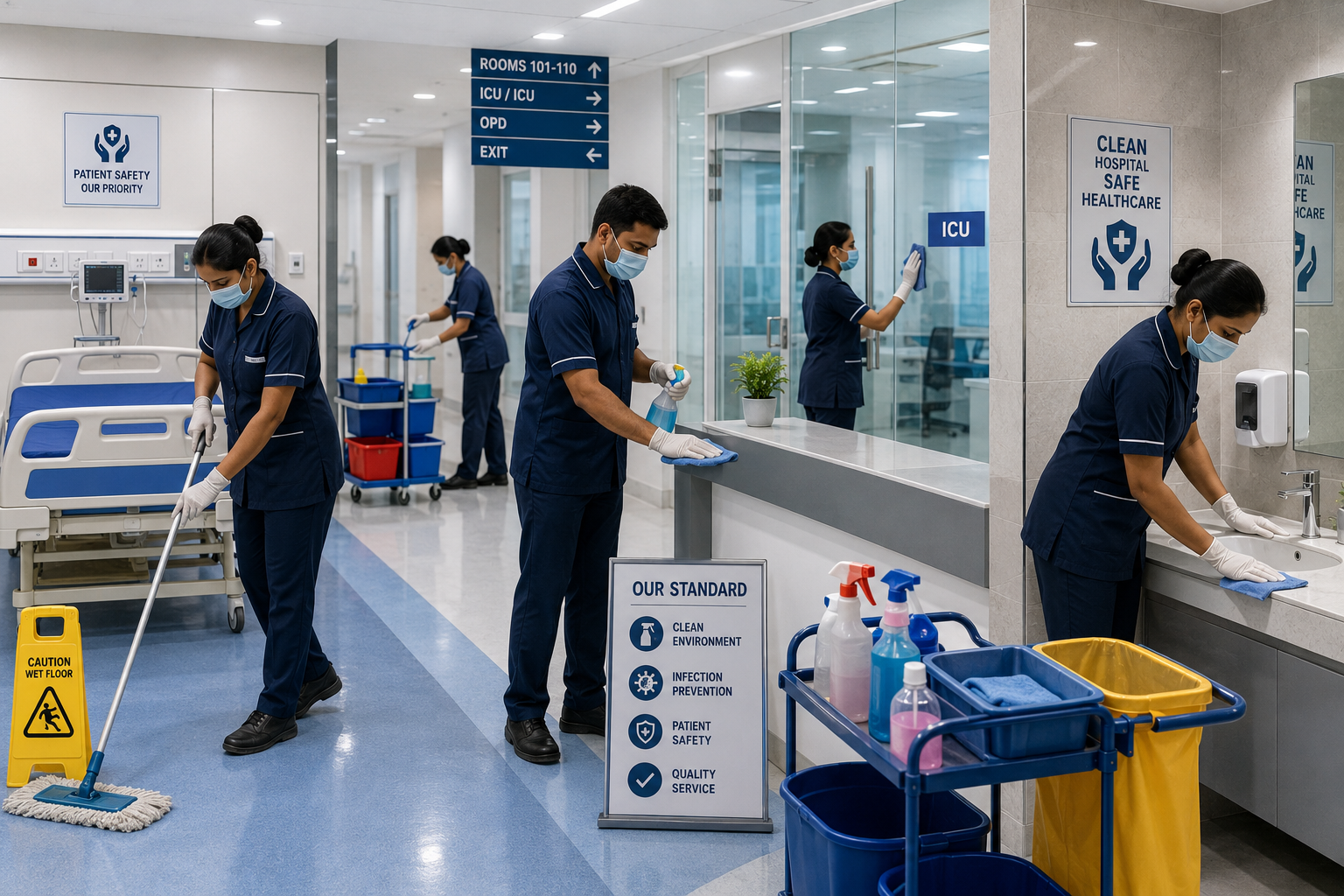
Hospital housekeeping is much more than routine cleaning. In healthcare facilities, a properly managed housekeeping system supports infection prevention, patient safety, staff wellbeing and a hygienic environment. The World Health Organization (WHO) identifies environmental cleaning as an important component of infection prevention and control, while emphasizing the need for trained cleaning personnel and standardized procedures.
For hospitals, clinics and healthcare facilities across Ghaziabad, Delhi, Gurgaon, Faridabad, Noida, Greater Noida and Uttar Pradesh, housekeeping should be managed through documented procedures, trained manpower and regular supervision.
1. Follow Area-Specific Cleaning Procedures
Different hospital areas have different cleaning requirements. Patient rooms, operating areas, laboratories, emergency departments, washrooms and administrative offices should have clearly defined cleaning schedules and procedures. WHO recommends written protocols specifying the required cleaning method, frequency, responsibility, tools and materials.
2. Use Trained Housekeeping Staff
Hospital housekeeping personnel should receive proper training in cleaning techniques, chemical handling, PPE use, waste handling and infection-prevention practices. WHO notes that healthcare cleaners play an important role in preventing healthcare-associated infections.
3. Maintain Proper Cleaning and Disinfection
Routine cleaning should remove dirt and organic matter before appropriate disinfection where required. Cleaning products and disinfectants should be selected and used according to the manufacturer’s instructions and the healthcare facility’s protocols.
4. Give Special Attention to High-Touch Surfaces
Door handles, switches, rails, frequently touched equipment surfaces, countertops and other high-touch areas require systematic cleaning. Spills and visible contamination should be addressed promptly rather than waiting for the next scheduled cleaning cycle.
5. Use Appropriate PPE
Housekeeping staff should use suitable personal protective equipment according to the cleaning task and potential exposure. Gloves and other required protective equipment help reduce occupational exposure during cleaning and handling of contaminated materials.
6. Follow Safe Waste-Handling Practices
Healthcare waste should be segregated, collected, transported and disposed of according to applicable healthcare-facility procedures and regulations. Housekeeping teams should be trained to avoid mixing general waste with potentially infectious or hazardous waste.
7. Maintain Cleaning Equipment
Mops, cloths, buckets, cleaning machines and other equipment should be cleaned, maintained and stored properly. Reusable cleaning supplies should be decontaminated regularly to minimize the risk of spreading contamination.
8. Maintain Checklists and Supervision
Daily housekeeping checklists, inspection records and supervisor audits can help ensure that required tasks are completed consistently. Healthcare facilities should clearly define responsibilities and maintain records of cleaning activities.
Conclusion
Effective hospital housekeeping standards require trained personnel, area-specific cleaning procedures, appropriate disinfection, PPE, safe waste handling, maintained equipment and continuous supervision. A professional facility management approach can help hospitals maintain consistent environmental hygiene while supporting their broader infection-prevention and patient-safety efforts.
Healthcare facilities in Ghaziabad, Delhi, Gurgaon, Faridabad, Noida, Greater Noida and Uttar Pradesh can benefit from professionally managed housekeeping services designed around their specific operational requirements.
Note: Hospital housekeeping procedures should be aligned with the facility’s infection prevention and control program, applicable Indian regulations, and product/manufacturer instructions. The recommendations above are general guidance, not a substitute for a hospital’s approved clinical or IPC protocols.