
Facility management has become an important part of how businesses operate, maintain their workplaces, and deliver a better experience to employees, customers, and visitors. From corporate offices and shopping malls to hospitals, residential complexes, factories, and educational institutions, professional facility management helps organisations maintain safe, clean, efficient, and well-organised environments.
In India, changing workplace expectations, rapid urban development, increasing demand for professional services, and the adoption of digital technologies are influencing the way facilities are managed. Businesses are increasingly looking beyond basic housekeeping and security to more coordinated solutions that support operational efficiency, hygiene, safety, and long-term asset maintenance.
Understanding the latest facility management trends in India can help businesses make informed decisions, improve service quality, and prepare their facilities for future requirements.
In this blog, we explore the major trends shaping the Indian facility management industry in 2026 and explain how organisations can benefit from them.
1. Technology-Driven Facility Management
Technology is changing how facility management teams monitor buildings, assign tasks, and manage daily operations. Digital tools can help service providers improve coordination, maintain records, and respond to maintenance requirements more efficiently.
Common technology applications include:
- Computerised maintenance management systems (CMMS).
- Digital housekeeping and inspection checklists.
- Mobile applications for attendance and task allocation.
- Online complaint and service request management.
- Digital reporting and performance dashboards.
- Building management systems for monitoring equipment and utilities.
For example, a corporate office can use a digital maintenance system to track air-conditioning complaints, schedule preventive maintenance, and monitor the completion of housekeeping tasks.
These solutions help reduce paperwork, improve accountability, and provide facility managers with better visibility into daily operations.
2. Growing Demand for Integrated Facility Management Services
Businesses increasingly prefer coordinated service arrangements instead of managing multiple vendors for different operational requirements.
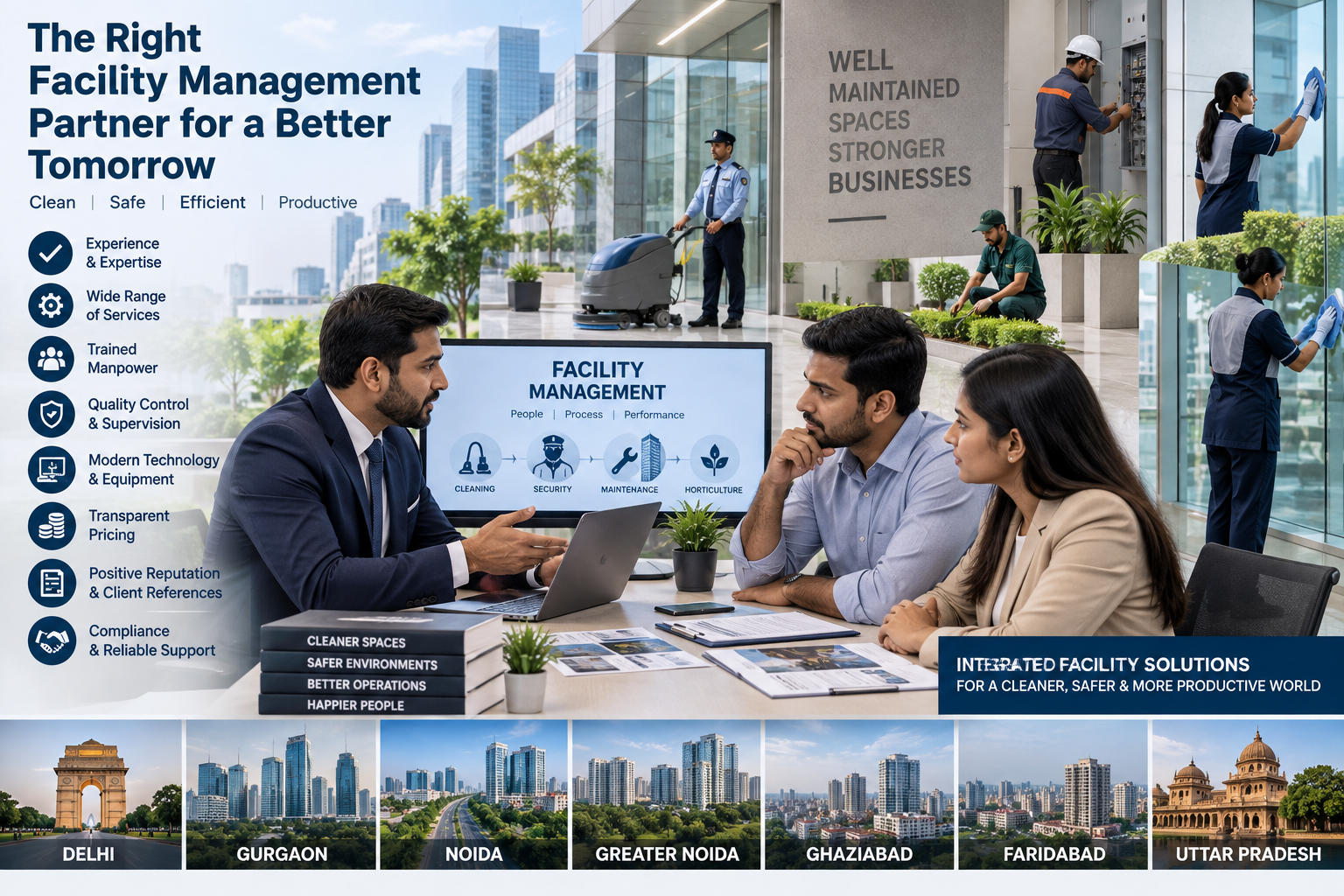
Integrated Facility Management (IFM) combines several services under a unified management structure. Depending on the client’s requirements, these may include housekeeping, security, technical maintenance, pest control, landscaping, pantry management, and support staff.
The key benefits include:
- Simplified vendor coordination.
- Consistent service standards.
- Better workforce planning.
- Consolidated reporting and communication.
- Improved monitoring of service-level agreements.
- Greater visibility into operational costs.
For organisations operating across multiple offices, commercial buildings, or industrial locations, integrated facility management can make daily administration easier.
However, successful integration requires clear responsibilities, trained supervisors, measurable service standards, and regular performance reviews.
3. Sustainable and Energy-Efficient Buildings
Sustainability is becoming an important consideration for commercial property owners and businesses. Organisations are paying greater attention to electricity consumption, water use, waste management, and the environmental impact of building operations.
Facility management teams can support these goals through practical measures such as:
- Monitoring electricity and water consumption.
- Scheduling preventive maintenance for HVAC systems.
- Using water-efficient cleaning methods.
- Promoting waste segregation and responsible disposal.
- Selecting suitable low-impact cleaning products.
- Maintaining green spaces and efficient irrigation systems.
- Encouraging energy-saving practices among occupants.
These initiatives can help businesses identify avoidable resource consumption and improve operational efficiency.
Sustainable facility management does not always require major investment. Regular inspections, better maintenance schedules, employee awareness, and careful resource monitoring can also make a meaningful difference.
4. Smart Building Management and IoT Solutions
Internet of Things (IoT) devices and smart building systems allow facility managers to collect operational data from connected equipment and sensors.
Depending on the building infrastructure, these systems can monitor temperature, indoor air quality, occupancy, lighting, water leakage, and equipment performance.
For instance, connected sensors may help identify unusual equipment behaviour before it develops into a major maintenance problem. Occupancy data can also help organisations review how meeting rooms and shared spaces are being used.
Smart building solutions can support:
- More informed maintenance planning.
- Better control of lighting and HVAC systems.
- Early identification of selected equipment issues.
- Improved comfort for building occupants.
- More effective use of available space.
Businesses should choose technologies based on their building size, operational needs, integration requirements, and budget rather than adopting expensive systems without a clear purpose.
5. Increased Focus on Workplace Hygiene and Professional Housekeeping
Cleanliness remains a fundamental part of facility management. Offices, hospitals, malls, hotels, educational institutions, and residential communities require consistent cleaning procedures to maintain presentable and hygienic environments.
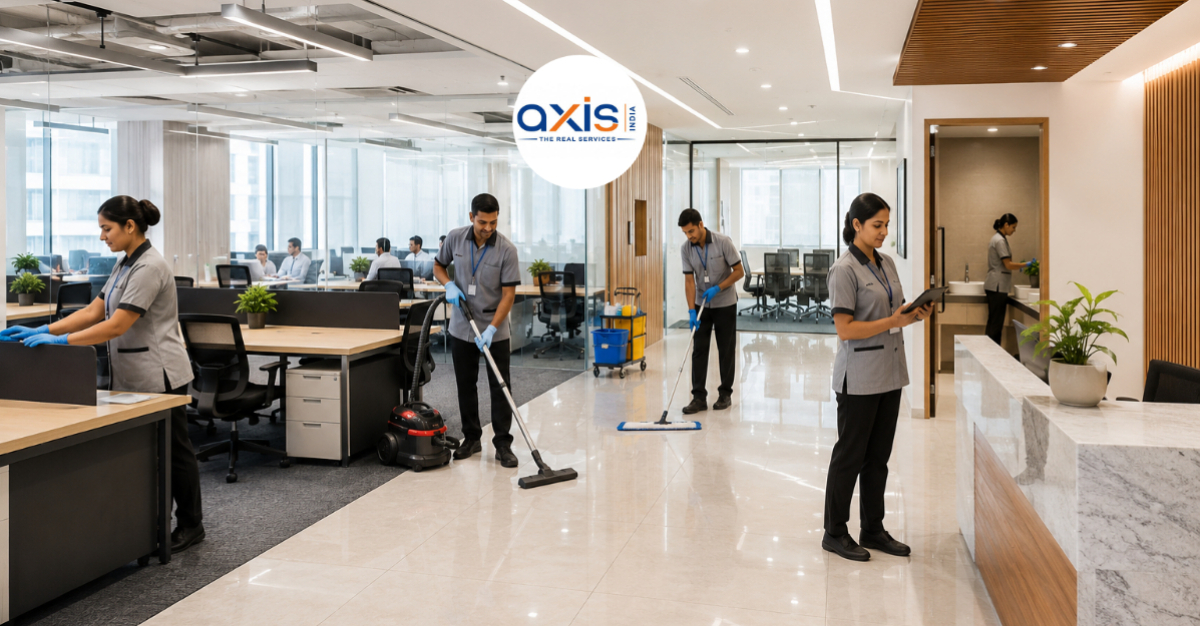
Modern housekeeping operations increasingly emphasise structured cleaning schedules, trained staff, appropriate equipment, and documented quality checks.
Important practices include:
- Daily, weekly, and periodic cleaning schedules.
- High-touch surface cleaning where appropriate.
- Separate cleaning procedures for different areas.
- Correct use and storage of cleaning chemicals.
- Staff training in equipment handling and workplace safety.
- Supervisor inspections and issue reporting.
- Mechanised cleaning for suitable large floor areas.
Professional housekeeping services can help organisations establish consistent cleaning standards while allowing internal teams to concentrate on their core responsibilities.
6. Stronger Security and Workplace Safety Measures
Security remains a major requirement for corporate offices, industrial facilities, residential complexes, shopping centres, and other commercial properties.
Traditional guarding services are increasingly complemented by access-control systems, visitor management software, CCTV monitoring, and documented incident-reporting procedures.
Depending on the facility, security management may include:
- Trained security guards and supervisors.
- Visitor entry and exit records.
- Access control for restricted areas.
- Emergency response procedures.
- Incident reporting and escalation.
- Coordination with building management.
- Periodic safety inspections and drills.
Technology can improve visibility, but trained personnel and clear operating procedures remain essential.
Businesses should also assess the specific risks associated with their premises and ensure that security arrangements meet applicable legal requirements.
7. Predictive and Preventive Maintenance
Unexpected equipment failures can interrupt business operations, affect occupant comfort, and lead to expensive repairs. Preventive maintenance helps reduce these risks by following planned inspection and servicing schedules.
Predictive maintenance takes this approach further by using equipment condition data and other indicators to identify potential problems before failure occurs.
Facility management teams can apply these methods to:
- Air-conditioning and ventilation systems.
- Electrical installations.
- Pumps and water systems.
- Elevators and other building equipment.
- Backup power systems.
- Fire and life-safety equipment.
For example, regular servicing of an office’s HVAC system can help identify clogged filters, unusual noise, or declining performance before the issue causes significant disruption.
The appropriate maintenance strategy depends on equipment criticality, manufacturer recommendations, available monitoring systems, and the consequences of downtime.
8. Skilled Workforce Development and Training
People remain at the centre of facility management. Even with advanced software and modern equipment, service quality depends on the knowledge, reliability, and performance of the workforce.
Facility management companies are placing greater importance on employee induction, practical training, supervision, and performance monitoring.
Key training areas include:
- Professional housekeeping techniques.
- Safe chemical handling and equipment operation.
- Customer service and workplace etiquette.
- Security protocols and emergency procedures.
- Occupational health and safety.
- Technical maintenance and fault reporting.
- Digital attendance and work-order systems.
Regular training can help employees perform their duties more confidently and follow consistent operating procedures.
Service providers must also consider workforce attendance, staff retention, statutory compliance, and appropriate working conditions when planning their operations.
9. Data-Driven Service Quality and Performance Monitoring
Clients increasingly need clear evidence that contracted facility management services are being delivered as agreed.
Performance monitoring helps businesses assess service quality, identify recurring issues, and decide where corrective action is required.
Useful key performance indicators (KPIs) may include:
| KPI | What it measures |
|---|---|
| Complaint resolution time | How quickly service issues are addressed |
| Planned maintenance completion | Completion of scheduled maintenance activities |
| Housekeeping inspection score | Compliance with defined cleaning standards |
| Staff attendance | Workforce availability against the agreed deployment |
| Repeat complaints | Frequency of recurring service issues |
| Safety incident reporting | Tracking of reported incidents and corrective actions |
KPIs should be realistic, measurable, and relevant to the services covered by the contract. Regular reviews between the client and service provider help ensure that the figures lead to practical improvements.
10. Customised Facility Management for Different Industries
Not every facility has the same operational requirements. A hospital needs a different service approach from a corporate office, shopping mall, warehouse, or residential society.
As a result, businesses increasingly benefit from service plans designed around their specific environment, occupancy, operating hours, and risk profile.
Examples include:
- Corporate offices: Housekeeping, pantry services, reception support, and maintenance.
- Hospitals and healthcare facilities: Specialised cleaning protocols, support staffing, and strict hygiene procedures.
- Shopping malls: High-footfall cleaning, security coordination, waste handling, and public-area maintenance.
- Industrial facilities: Site housekeeping, technical maintenance, safety coordination, and workforce support.
- Residential complexes: Common-area cleaning, security, landscaping, and maintenance assistance.
- Educational institutions: Classroom cleaning, sanitation, grounds maintenance, and campus security.
A customised approach helps organisations select the services they need without relying on a one-size-fits-all operating model.
11. Greater Attention to Compliance and Risk Management
Compliance is an essential part of professional facility management in India. Businesses must consider applicable labour laws, workplace safety requirements, fire and life-safety provisions, environmental obligations, and other rules relevant to their facility and service arrangement.
Facility managers and service providers can support compliance through:
- Maintaining accurate employee and attendance records.
- Monitoring applicable registrations and statutory documentation.
- Conducting workplace safety inspections.
- Maintaining relevant equipment service records.
- Documenting incidents and corrective measures.
- Ensuring appropriate training and supervision.
- Reviewing contractor documentation periodically.
Requirements vary by location, industry, workforce arrangements, and the applicable legal framework. Businesses should verify current obligations with qualified compliance professionals rather than relying on a generic checklist alone.
12. Choosing the Right Facility Management Partner
As facility management requirements become more complex, selecting a capable service provider is an important business decision.
Before appointing a vendor, organisations should assess the provider’s experience, staffing capability, service coverage, supervision model, safety procedures, and reporting practices.
Consider the following factors:
- Relevant experience: Does the provider understand your type of facility?
- Service scope: Can it deliver the required services under clearly defined responsibilities?
- Workforce management: Are staff recruitment, training, attendance, and supervision handled effectively?
- Quality control: Are inspection schedules and service-level targets documented?
- Compliance: Can the provider supply relevant and valid documentation?
- Communication: Is there a clear escalation process for complaints and emergencies?
- Technology: Can the provider offer digital reporting or other tools where beneficial?
- Cost transparency: Are staffing, consumables, equipment, and additional charges clearly explained?
The lowest quotation may not always provide the best overall value. Businesses should compare service quality, deployment plans, compliance, and long-term operational reliability alongside pricing.
How Facility Management Trends Are Shaping Businesses in Delhi NCR
Delhi NCR is an important market for corporate offices, commercial properties, residential developments, healthcare facilities, warehouses, and industrial establishments.
In areas such as Noida, Greater Noida, Ghaziabad, and Gurgaon, organisations may need coordinated services to manage cleaning, security, maintenance, landscaping, and workplace support.
The growing complexity of commercial facilities makes reliable service delivery, trained manpower, transparent reporting, and preventive maintenance especially valuable.
Businesses in Delhi NCR can benefit from reviewing their current facility management arrangements, identifying service gaps, and evaluating whether integrated services or digital monitoring would improve their operations.
For organisations planning to outsource facility management, a clear scope of work and measurable service standards are useful starting points.
Conclusion
The future of facility management in India will be shaped by technology, sustainability, integrated services, workforce development, safety, and measurable service quality. These trends are encouraging businesses to treat facility management as an important part of operational planning rather than simply an administrative expense.
Whether managing a corporate office, hospital, shopping mall, factory, or residential complex, organisations can benefit from choosing the right service model and establishing clear expectations for performance.
By combining trained professionals, appropriate technology, planned maintenance, and consistent quality monitoring, businesses can create safer, cleaner, and more efficient facilities.
As requirements continue to evolve, selecting an experienced and dependable facility management partner can help organisations focus on their core activities while maintaining their premises to appropriate operational standards.
Frequently Asked Questions (FAQs)
1. What are the latest facility management trends in India?
Key trends include technology-driven operations, integrated facility management, sustainable building practices, smart building systems, professional housekeeping, preventive maintenance, workforce training, and data-driven service quality monitoring.
2. What is Integrated Facility Management (IFM)?
Integrated Facility Management combines multiple services, such as housekeeping, security, technical maintenance, pest control, and landscaping, under a coordinated management structure.
3. How does technology improve facility management?
Digital work orders, maintenance software, connected sensors, and reporting dashboards help facility managers monitor operations, track service requests, improve coordination, and identify maintenance issues.
4. Why is professional facility management important for businesses?
Professional facility management helps businesses maintain clean and safe premises, coordinate support services, manage maintenance activities, and provide a better environment for employees, customers, and visitors.
5. How can businesses choose a facility management company in Delhi NCR?
Businesses should evaluate the provider’s industry experience, service coverage, workforce training, supervision, compliance documentation, quality-control processes, and pricing transparency.