
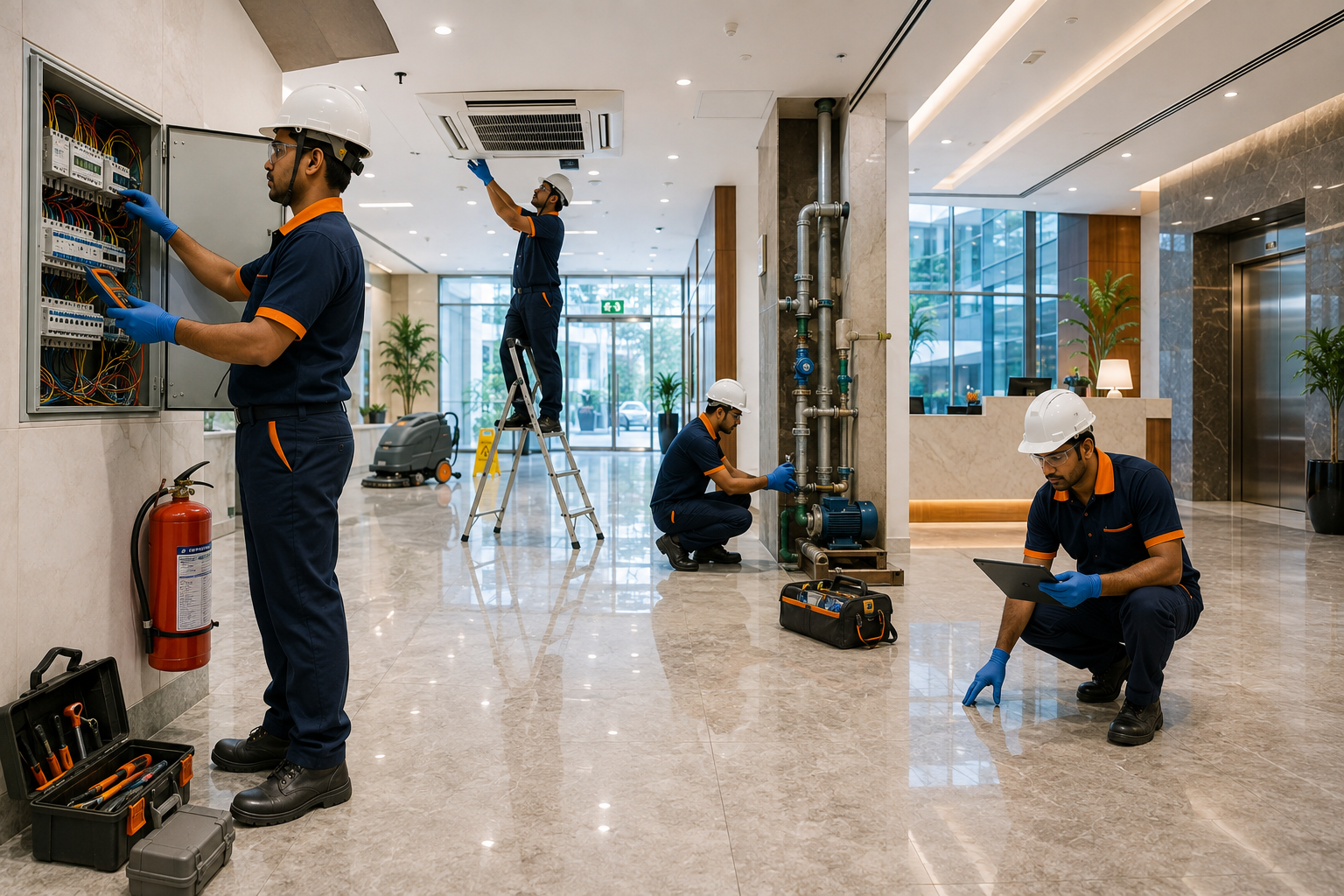
A well-maintained building is essential for safety, comfort, operational efficiency, and the long-term value of a property. Offices, hotels, hospitals, shopping malls, schools, warehouses, and residential complexes require regular inspection and maintenance to keep their infrastructure, equipment, and common areas in excellent condition. A structured building maintenance checklist helps facility management teams identify problems early and prevent costly repairs.
Why Is Building Maintenance Important?
Regular building maintenance reduces unexpected breakdowns, improves workplace safety, supports energy efficiency, and creates a better experience for employees, customers, guests, and visitors. Preventive maintenance can also extend the life of building assets and reduce long-term operating expenses.
Essential Building Maintenance Checklist
1. Electrical Systems
Inspect electrical panels, switches, sockets, wiring, emergency lighting, and backup power systems regularly. Check for visible damage, overheating, loose connections, or other issues and arrange professional inspection where required.
2. HVAC Systems
Air-conditioning and ventilation systems should be inspected and serviced periodically. Clean or replace filters as appropriate, check vents and thermostats, and ensure that indoor areas receive adequate ventilation and comfortable temperatures.
3. Plumbing & Water Systems
Check pipes, taps, washrooms, drainage systems, water tanks, pumps, and visible connections for leaks or blockages. Early detection of water leakage can help prevent structural damage and unnecessary water loss.
4. Flooring & Common Areas
Inspect floors, staircases, corridors, entrances, and high-traffic areas for cracks, stains, loose tiles, or other damage. Regular cleaning using appropriate floor-cleaning tools and machines helps preserve surfaces and maintain a professional appearance.
5. Fire & Safety Equipment
Fire extinguishers, alarms, emergency exits, evacuation signage, fire doors, and emergency lighting should be checked according to applicable safety requirements and maintenance schedules. Access to emergency exits should always remain clear.
6. Elevators & Escalators
Commercial buildings with elevators or escalators require scheduled inspection and servicing by qualified professionals. Report unusual sounds, movement, lighting issues, or operational problems promptly.
7. Exterior & Structural Areas
Inspect walls, ceilings, roofs, windows, doors, façade elements, parking areas, and drainage points for visible deterioration, water seepage, cracks, or damage. Timely repairs can prevent minor issues from becoming major maintenance problems.
8. Cleaning & Hygiene
A building maintenance plan should include routine cleaning of floors, glass, washrooms, lobbies, common areas, and high-touch surfaces. Professional cleaning machines, tools, and chemicals can improve housekeeping efficiency and consistency.
9. Preventive Maintenance Records
Maintain records of inspections, repairs, servicing dates, equipment condition, and upcoming maintenance requirements. Digital or scheduled maintenance logs make it easier for facility managers to track recurring tasks and identify assets requiring attention.
How Often Should a Building Be Maintained?
Maintenance frequency depends on the building type, age, occupancy, equipment, environment, and operational requirements. Daily housekeeping tasks can be combined with weekly, monthly, quarterly, and annual inspections to create a practical preventive maintenance schedule.
Conclusion
A comprehensive building maintenance checklist helps facility management teams keep commercial properties safe, functional, clean, and efficient. From electrical and HVAC systems to plumbing, flooring, fire safety, elevators, structural areas, and housekeeping, every component requires appropriate attention. Regular inspections combined with preventive maintenance can reduce downtime, protect valuable assets, and provide a safer and more comfortable environment for everyone using the facility.